







Indian cooking techniques are a delightful blend of art and science that can transform even the simplest ingredients into culinary masterpieces. From the sizzling sounds of tempering spices to the rhythmic rolling of dough for naan, each method tells a story steeped in tradition and flavor. It’s not just about cooking; it’s about creating a festival of tastes that dance on the palate.
Overview of Indian Cooking Techniques
Indian cooking techniques encompass a variety of methods that enhance the flavors and textures of dishes. One prominent technique is tempering, where oil or ghee heats spices to release their essential oils, creating robust flavors. Various ingredients, like mustard seeds and cumin, frequently undergo this process to provide aromatic depth.
Another essential method is sautéing, often used for cooking vegetables or meats in spices and oil. This technique aids in developing intricate flavor layers while ensuring the ingredients remain tender. Frying, both shallow and deep, forms the cornerstone of many popular Indian snacks, such as samosas and pakoras. Each bite delivers a satisfying crunch.
Steaming is also widely employed in Indian cuisine, particularly for dishes like idli and dhokla. This technique preserves nutrients and ensures a soft texture, making it a healthier cooking option. India’s diverse regional cuisines showcase other techniques, such as slow cooking, which allows flavors to meld and develop over time in curries and biryanis.
Grilling, often used in tandoori dishes, imparts a smoky flavor that distinctly characterizes these recipes. Cooking in a clay tandoor infuses dishes with a unique taste, elevating their appeal. Baking contributes to the preparation of traditional breads like naan and paratha, with each piece shaped by hand.
Overall, Indian cooking techniques embody creativity and cultural heritage. Every method, whether it’s rolling dough or simmering spices, forms an integral part of the vibrant culinary landscape in India.
Essential Cooking Methods
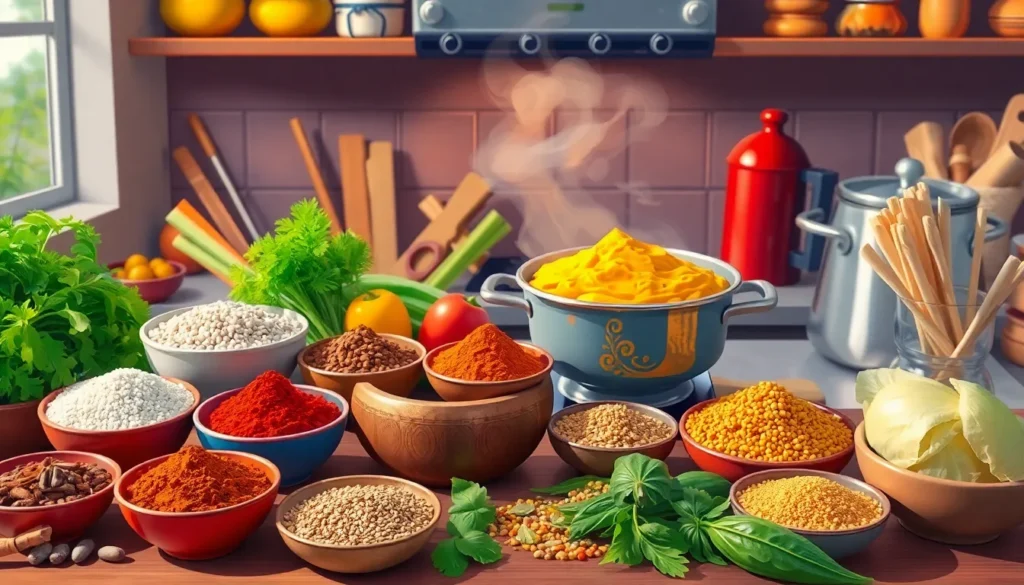
Indian cooking incorporates diverse techniques that enhance flavors and textures. Each method plays a vital role in creating authentic dishes.
Boiling and Steaming
Boiling serves as a fundamental technique for preparing legumes, grains, and vegetables. It’s efficient for cooking dishes like dal and rice, which form staples in Indian meals. Steaming, on the other hand, preserves nutrients while cooking. Popular steamed dishes include idlis, made from fermented rice and lentil batter, and dhoklas, which offer a fluffy texture. Both methods utilize water to create heat, ensuring food remains tender and flavorful.
Sautéing and Stir-Frying
Sautéing and stir-frying are essential for building flavor in Indian cuisine. A hot pan along with oil creates the base for numerous dishes. Aromatic spices, such as cumin and mustard seeds, release their essential oils during this process, enhancing overall taste. Typically, vegetables or proteins cook quickly over high heat, ensuring they retain crunchiness. Dishes like bhaaji and fried rice are perfect examples of these techniques, showcasing vibrant colors and intense flavors.
Roasting and Baking
Roasting adds depth to Indian flavors by caramelizing natural sugars in ingredients. Tandoori cooking exemplifies this method when marinated meats are exposed to high heat, resulting in a smoky flavor. Similarly, baking is significant in creating breads like naan and parathas, which accompany various curries and gravies. Both techniques rely on dry heat, allowing spices to meld beautifully, creating a rich, savory experience.
Regional Variations in Techniques
Regional variations showcase diverse Indian cooking methods, each embodying unique flavors and ingredients. These techniques exemplify the depth of Indian cuisine across the subcontinent.
Northern Indian Cooking Methods
Northern Indian cooking often emphasizes methods like tandoori, where marinated proteins and breads are cooked in a clay oven. Dum cooking, a slow-cooking technique, enhances the flavors by trapping steam in tightly sealed pots, resulting in rich dishes like biryani. Meanwhile, sautéing with ghee is common for tempering spices, creating aromatic bases for curries. Furthermore, the use of dairy products, such as yogurt and cream, enriches many northern dishes. Traditional breads like naan, paratha, and roti benefit from these cooking techniques, reflecting the region’s hearty and robust culinary style.
Southern Indian Cooking Methods
Southern Indian cooking exploits techniques like steaming, commonly used for dishes such as idlis and dhoklas, promoting health benefits while retaining nutrients. They also utilize sautéing and stir-frying, which create flavor-packed dishes with spices like mustard seeds and curry leaves. Coconut oil features prominently, enhancing the taste of various recipes. Additionally, unique variations of curry, including rasam and sambar, highlight the use of tamarind for tanginess. Slow cooking, a favored approach in the southern states, allows complex flavors to develop, showcasing the richness and vibrancy of the region’s cuisine.
Tools and Equipment for Indian Cooking
Various tools and equipment play a significant role in Indian cooking. From traditional utensils to modern appliances, each serves a unique purpose in enhancing culinary practices.
Common Utensils Used
Ladles, known as “karchi,” facilitate serving and stirring. Tawa is crucial for making flatbreads like roti and paratha. Mixing bowls aid in combining spices and ingredients, ensuring balanced flavors in dishes. Pressure cookers speed up the cooking of staples such as lentils and rice while preserving nutrients. Mortar and pestle, or “sil-batta,” bring out the essence of spices when grinding them into pastes for curries. Kadai is perfect for frying and sautéing, being deep and versatile for various cooking methods.
Modern Appliances
Electric rice cookers simplify the preparation of perfectly cooked rice. Induction cooktops offer precise temperature control, making sautéing and frying more efficient. Slow cookers allow for tenderizing tough cuts of meat, creating rich flavors over time. Food processors significantly reduce prep time by chopping vegetables and grinding spices quickly. Stand mixers assist in kneading dough, crucial for various breads, ensuring consistent texture and elasticity. Air fryers provide a healthier alternative for preparing snacks like samosas, achieving crispy results with less oil.
Indian cooking techniques are a vibrant reflection of the country’s rich culinary heritage. Each method serves a purpose beyond mere preparation; they transform simple ingredients into flavorful masterpieces. The diversity in techniques showcases regional nuances and the creativity that defines Indian cuisine.
From the smoky allure of tandoor cooking to the health-conscious approach of steaming, these methods highlight the balance between tradition and modernity. The essential tools, both traditional and contemporary, further enhance the cooking experience, making it accessible and enjoyable for everyone. Embracing these techniques not only enriches one’s cooking skills but also fosters a deeper appreciation for the artistry behind Indian food.