







Steak lovers unite! The quest for the perfect steak can feel like a daunting journey, but fear not—it’s easier than you think. Whether you’re a grill master or just starting your culinary adventure, mastering steak cooking techniques can elevate your dinner game from “meh” to “magnificent.”
Overview of Steak Cooking Techniques
Various techniques exist for cooking steak, each offering unique flavors and textures. Grilling stands out as a popular method, allowing for high heat and direct flames to achieve a charred exterior. Understanding the right temperature for grilling enhances the overall flavor profile, making medium-rare a common preference.
Pan-searing delivers an equally delightful result by creating a crust on the steak. Using a cast iron skillet retains heat well, ensuring an even sear. This method often involves adding butter or herbs, which infuse additional flavor.
Broiling provides a similar effect to grilling but uses overhead heat. This technique works best for thicker cuts, as it cooks evenly from the top down. Keeping an eye on the watchful process prevents overcooking.
Sous vide offers precision cooking, where steak cooks in a water bath at a consistent temperature. This method allows for incredibly tender results when followed by a quick sear. An immersion circulator maintains accuracy, essential for perfect doneness.
Smoking lies in a different realm, giving steak a rich, complex flavor over time. Wood chips introduce various flavors, depending on the type used. Patience often rewards one with a deliciously infused steak.
Reverse searing has gained popularity, whereby one slow-cooks the steak before finishing with a sear. This dual approach ensures even cooking throughout, coupled with a perfectly caramelized crust. Many chefs appreciate the control this method provides.
Each technique offers distinctive results, catering to various tastes and preferences. Exploring these methods broadens culinary skills and enhances the overall steak experience.
Common Steak Cuts
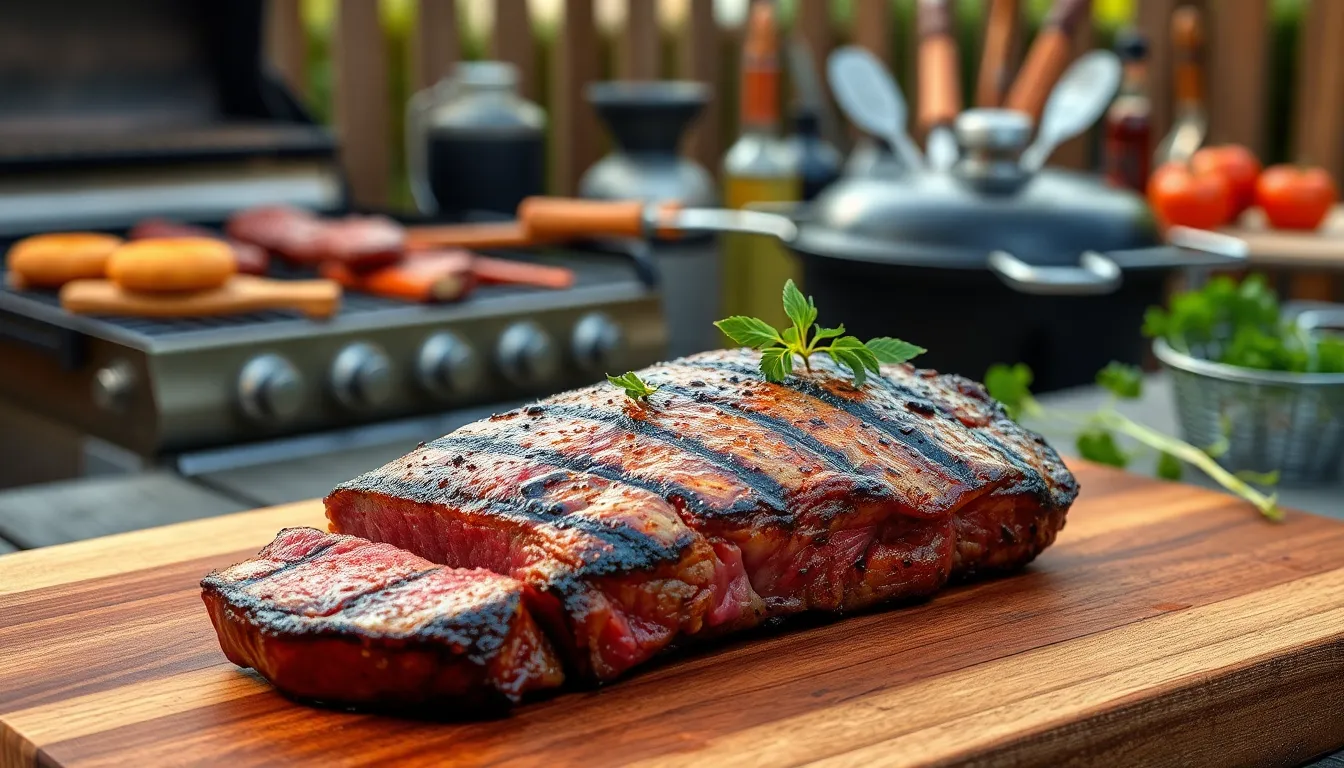
Steak comes in various cuts, each with distinct characteristics and cooking methods. Understanding the differences helps in choosing the right cut for any meal.
Tender Cuts
Tender cuts, such as filet mignon and ribeye, offer exceptional flavor and tenderness. Filet mignon features a soft texture, making it ideal for quick cooking methods. Ribeye, known for its marbling, provides a juicy bite, perfect for grilling or pan-searing. Strip steak, another popular cut, balances tenderness and flavor, often resulting in excellent crust when cooked properly. These cuts typically require less cooking time, making them suitable for those seeking a quick yet luxurious dining experience.
Tough Cuts
Tough cuts, including chuck and flank steak, require more attention during cooking. Chuck steak, often used for braising, becomes tender when slow-cooked, allowing flavors to develop fully. Flank steak, while leaner, works well with marinades and high-heat methods. Skirt steak, known for its flavor, also benefits from quick cooking and slicing against the grain. These cuts may not be as tender initially, yet their robust flavor profiles provide delicious options for various dishes.
Different Cooking Methods
Steak cooking offers various methods, each producing distinct flavors and textures. Exploring these techniques allows cooks to enhance their skills.
Grilling
Grilling remains a favorite for achieving that signature charred flavor. Many cooks prefer to grill over high heat, promoting a delicious crust while keeping the inside juicy. Using a two-zone fire helps regulate cooking temperatures; this approach allows for searing followed by indirect cooking. Popular cuts include ribeye and T-bone, which stand up well to direct heat. Lastly, allowing the steak to rest before slicing retains juices for a more flavorful bite.
Pan-Searing
Pan-searing provides a fantastic option for those who crave a delicious crust. A cast-iron skillet often yields the best results due to its heat retention ability. Heating the pan until it shimmers ensures a perfect sear; adding oil just before placing the steak offers a non-stick surface. Flipping the steak only once promotes even cooking. Incorporating butter and herbs during the last few minutes adds richness and depth of flavor.
Sous Vide
Sous vide emphasizes precision and control in cooking steak. Using this technique involves sealing the steak in a vacuum bag before cooking it in a water bath at a consistent temperature. This method results in perfectly cooked steak throughout, with tenderness achieved without overcooking. After sous vide, a quick sear in a hot pan creates a flavorful crust. Popular among chefs, this method is ideal for achieving restaurant-quality steak at home.
Broiling
Broiling utilizes overhead heat, making it efficient for cooking thicker cuts. Placing the steak close to the heat source encourages fast cooking and browning, resulting in a beautifully charred exterior. Adjusting the distance from the broiler alters cooking speed; a high rack promotes a more gradual cook while a lower rack crisps the surface quickly. Flank and sirloin steaks cook exceptionally well using this method, offering a satisfying textural contrast.
Tips for Perfectly Cooked Steak
Cooking steak to perfection requires attention to detail in seasoning and understanding doneness levels. These elements greatly influence the overall flavor and enjoyment of the meal.
Seasoning
Enhancing steak flavor starts with seasoning. Salt elevates the natural taste and helps form a crust; kosher salt performs best due to its larger grain size. Pepper adds spice and contrast; freshly cracked peppercorns offer the most zest. Adding herbs, like rosemary and thyme, introduces aromatic notes. For a quick marinade, consider using olive oil, lemon juice, and garlic, which tenderizes while infusing flavor. Seasoning can occur several hours before cooking for a more robust flavor, ensuring the steak absorbs all the ingredients.
Doneness Levels
Measuring steak doneness guides cooking to desired preferences. Rare denotes a cool, red center, typically at 125°F (52°C). Medium-rare, favored by many steak enthusiasts, reaches 135°F (57°C) and maintains a warm pink core. Medium presents a light pink center around 145°F (63°C), while medium-well and well-done feature minimal pink, measuring 160°F (71°C) and above. Utilizing a meat thermometer simplifies achieving the ideal doneness. Tailoring doneness levels to individual tastes enhances the overall dining experience, making it vital to communicate preferences during cooking.
Mastering steak cooking techniques opens up a world of culinary possibilities. Each method offers its own unique flavors and textures that can elevate any meal. Whether one prefers the smoky essence of grilled steak or the buttery richness of pan-seared cuts, there’s a technique suited for every palate.
Understanding different steak cuts and their specific cooking requirements empowers cooks to make informed choices. With the right seasoning and attention to doneness, anyone can achieve perfectly cooked steak that impresses family and friends. Embracing these techniques not only enhances the dining experience but also builds confidence in the kitchen. So grab that steak and start experimenting with these methods to discover personal favorites.