







Japanese cooking techniques are a delightful blend of art and science, transforming simple ingredients into culinary masterpieces. From the precision of sushi-making to the delicate balance of flavors in ramen, these methods not only tantalize the taste buds but also tell a story of tradition and culture.
Overview Of Japanese Cooking Techniques
Japanese cooking techniques showcase a blend of artistry and precision. Techniques emphasize the freshness of ingredients while honoring their natural flavors. Sushi-making relies on selecting high-quality fish and perfectly seasoned rice, creating a balance of taste and texture.
Ramen preparation involves mastering the art of noodles, broth, and toppings, each contributing to the overall dish. Techniques such as steaming, grilling, and simmering reveal varied textures while enhancing ingredient characteristics. For instance, grilling fish over charcoal imparts a smoky flavor that elevates the dish.
Moreover, knife skills in Japanese cuisine play a crucial role. Chefs use precise cuts to enhance the visual appeal and texture of ingredients. The importance of presentation cannot be overstated; it reflects the care and attention given to creating each dish.
Fermentation also holds significance in Japanese cooking. Techniques like pickling vegetables create umami depth, enriching flavors in meals. Soy sauce, miso, and sake are products of this process, integral to various dishes.
Tempering, or controlling the heat during cooking, allows for better flavor development. Techniques such as this guide cooks in achieving the desired level of doneness without sacrificing taste or texture.
Ultimately, these methods represent a deep respect for nature’s bounty. Japanese cooking transcends mere sustenance, elevating it into a form of culinary expression rooted in tradition and culture. Each technique not only contributes to taste but also narrates a story of the rich Japanese heritage.
Essential Tools For Japanese Cooking
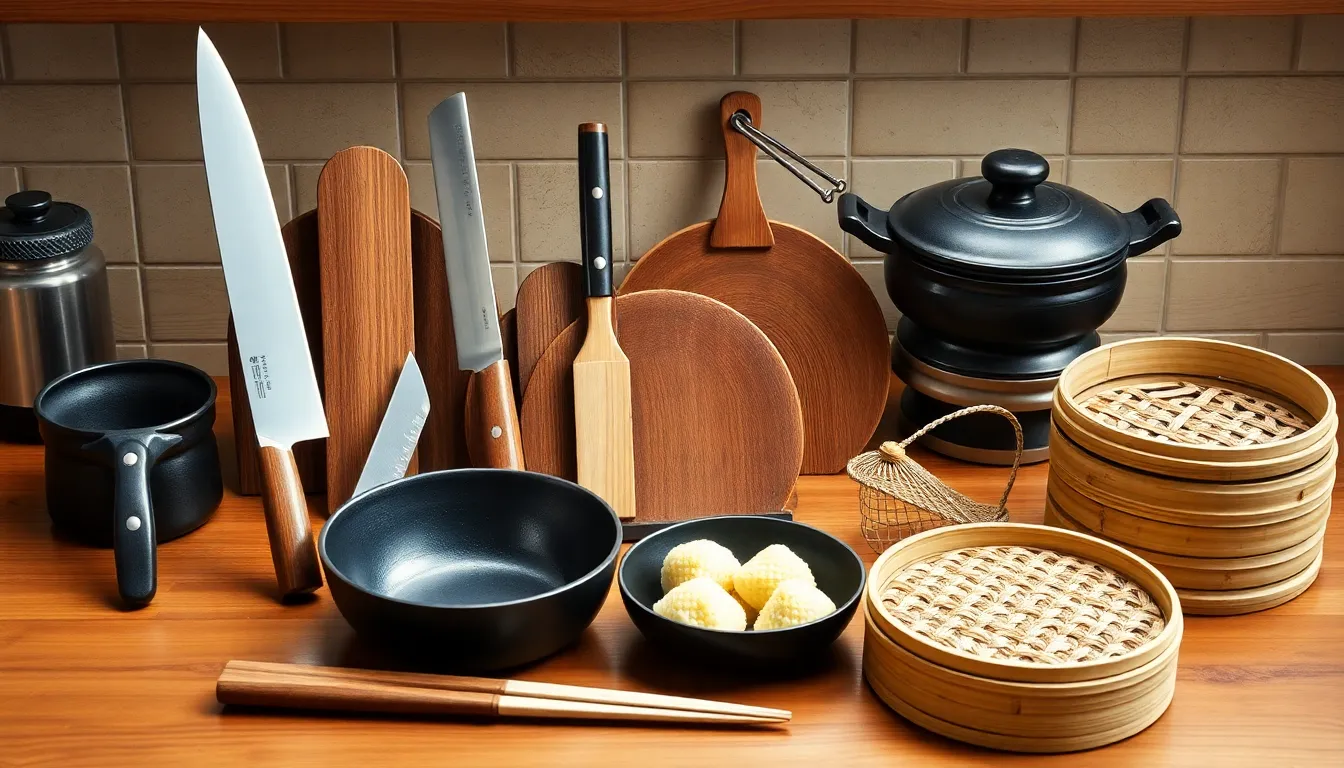
Japanese cooking relies heavily on specific tools that enhance food preparation and presentation. Utilizing the right equipment brings out the best in ingredients and techniques.
Knives
Japanese knives exhibit precision and craftsmanship. A Santoku knife excels in versatility, suitable for slicing, dicing, and chopping. The Yanagiba knife specializes in sashimi preparation, featuring a long, slender blade for clean cuts. Additionally, a Nakiri knife aids in chopping vegetables, offering a straight edge for consistent results. Each knife requires appropriate maintenance, such as sharpening and honing, ensuring optimal performance during cooking.
Cookware
Quality cookware underpins successful Japanese cuisine. A donabe, or earthenware pot, excels in retaining heat and moisture, making it perfect for stews and rice dishes. The tataki grill provides a unique cooking experience, allowing for direct flame grilling of fish or meat. Cast iron skillets evenly distribute heat, enhancing flavors through proper searing. Moreover, bamboo steamers are essential for preparing dumplings and vegetables, allowing for healthy cooking methods that preserve nutrients. Each piece of cookware plays a pivotal role in achieving authentic Japanese dishes.
Traditional Japanese Cooking Techniques
Traditional Japanese cooking techniques emphasize precision and artistry, creating dishes that celebrate fresh ingredients. Techniques like searing and steaming are foundational, enhancing flavors while preserving texture.
Searing (Yaki)
Searing, or yaki, involves cooking food over direct heat, developing rich flavors and appealing textures. Various ingredients such as meat, fish, and vegetables benefit from this technique, which caramelizes sugars and creates a beautiful crust. Grilling over charcoal enhances the smoky flavor, while using cast iron promotes even heat distribution. Yakitori, skewered chicken grilled to perfection, exemplifies the yaki technique’s versatility. Furthermore, searing supports the umami flavor, making the dish more satisfying.
Steaming (Mushi)
Steaming, known as mushi, retains nutrients while keeping ingredients moist. Various foods ranging from fish to vegetables are commonly steamed, allowing their natural flavors to shine. The method uses heat from water vapor, preventing loss of delicate flavors. Bamboo steamers, frequently employed in authentic Japanese kitchens, enable gentle cooking and provide an appealing presentation. Popular dishes like chawanmushi, a savory egg custard, showcase the delicate texture achieved through steaming. Steaming enhances the overall taste, ensuring meals are both healthy and enjoyable.
Modern Japanese Cooking Techniques
Modern Japanese cooking techniques integrate tradition with innovation. These methods enhance flavors, textures, and presentation, showcasing Japan’s culinary artistry.
Sous Vide
Sous vide involves cooking food slowly in a temperature-controlled water bath. Precision defines this technique, ensuring even cooking while preserving moisture and flavor. Ingredients often come out tender, making it popular for proteins like chicken and fish. Chefs utilize sous vide methods to achieve consistent results, elevating dishes that might otherwise lose their essential qualities. The technique’s ability to infuse ingredients with seasonings while retaining their natural textures highlights its modern adaptability and appeal.
Fusion Approaches
Fusion approaches blend Japanese culinary traditions with global flavors and techniques. This innovation allows chefs to create unique dishes, showcasing versatility through ingredients like miso in Western-style sauces or sushi rolled with non-traditional fillings. Chefs experiment with presentation and flavor profiles, reflecting a modern dining experience. Dishes such as sushi burritos or ramen burgers highlight creativity while honoring the essence of Japanese cuisine. By combining elements from various culinary traditions, fusion cooking continues to redefine Japanese food, appealing to diverse palates.
Regional Variations In Japanese Cooking Techniques
Diverse regional cooking techniques showcase the rich tapestry of Japan’s culinary landscape. Each area embraces unique flavors and methods, reflecting local ingredients and cultural influences.
In Hokkaido, seafood reigns supreme, utilizing techniques like ikizukuri, where fish is prepared alive for maximum freshness. This method highlights the quality of the region’s seafood, emphasizing texture and taste that delights diners.
Kansai, known for its savory dishes, often employs techniques such as tataki, where meat or fish is seared briefly over high heat. This method preserves moisture and enhances flavor, evident in dishes like Kyoto’s yudofu.
On the other hand, Okinawa emphasizes healthful cooking techniques influenced by its local produce. Methods such as simmering, lightly braising vegetables with dashi, create nutrient-rich dishes. These techniques reflect the island’s unique climate and culinary philosophy.
The Kanto region, which includes Tokyo, specializes in grilling, showcasing yakitori’s charcoal-grilled chicken skewers. This method achieves a deep, smoky flavor that characterizes many staple dishes from the area.
When exploring the Noto Peninsula, traditional fermentation techniques emerge. Here, locally produced miso and soy sauce evolve through time, enriching dishes with umami. Local chefs pay homage to these practices, enhancing regional flavors.
Regardless of the area, Japanese cooking techniques embrace simplicity while highlighting ingredient quality. Each region contributes distinct flavors and methods to Japan’s culinary identity, fostering a deep appreciation for both tradition and innovation.
Japanese cooking techniques embody a harmonious blend of tradition and innovation. They showcase a deep respect for ingredients while elevating them through precise methods and artistic presentation. Each technique reflects the cultural heritage and regional diversity of Japan, allowing cooks to transform simple elements into extraordinary dishes.
As culinary boundaries continue to expand, these techniques remain relevant, inspiring chefs to explore new flavors while honoring their roots. Whether through time-honored practices or modern adaptations, the essence of Japanese cuisine lies in its commitment to quality and creativity. This dedication not only enriches the dining experience but also invites everyone to appreciate the artistry behind every meal.